
Explore how artificial intelligence intersects with Bitcoin. Learn about AI-driven mining efficiency, automated trading algorithms, and lightning network routing.
The convergence of artificial intelligence and blockchain technology represents one of the most powerful technological shifts of the decade. While much of the AI crypto narrative focuses on decentralized altcoin infrastructure like Bittensor or Render, artificial intelligence is also making a profound impact on the world’s largest digital asset: Bitcoin.
Far from being static digital gold, Bitcoin is increasingly interacting with machine learning algorithms, advanced predictive modeling, and automated network infrastructure.
This guide breaks down the core ways artificial intelligence is transforming Bitcoin mining, trading behavior, security, and network scaling.
1. AI Optimization in Bitcoin Mining
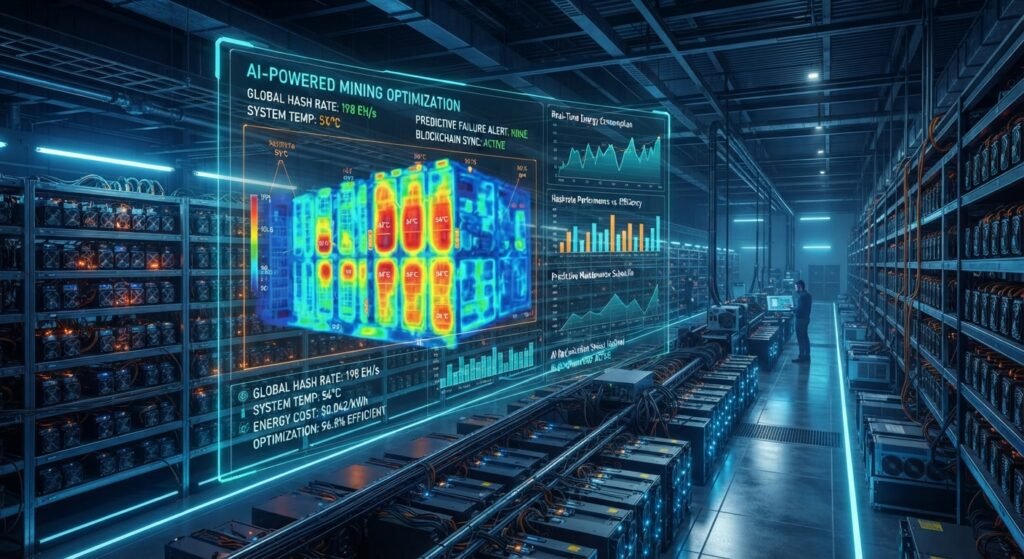
Bitcoin mining is an energy-intensive, highly competitive industry where efficiency dictates profitability. Machine learning models are transforming how mining operations function:
-
Predictive Energy Management: AI algorithms analyze real-time grid loads, weather forecasts, and spot electricity prices to dynamically power down or ramp up mining rigs, optimizing energy costs.
-
Hardware Thermal & ASIC Efficiency: Machine learning scripts monitor Application-Specific Integrated Circuit (ASIC) chip health, automatically adjusting voltage and overclocking parameters to maximize hash rate output while minimizing hardware degradation.
2. Advanced Market Dynamics and Algorithmic Trading
AI has fundamentally changed how capital flows into and out of the Bitcoin market.
-
Sentiment and On-Chain Analysis: Advanced Natural Language Processing (NLP) models scan global news, regulatory filings, and social media sentiment in milliseconds, gauging macro market reactions before human traders can react.
-
Whale Tracking and Pattern Recognition: Machine learning models track complex on-chain wallet movements, exchange inflows, and liquidity pools to predict potential market volatility spikes and liquidation cascades.
3. Lightning Network Routing and Automated Node Management
As Bitcoin’s Layer-2 scaling solution, the Lightning Network relies on efficient node routing to facilitate instant, low-cost microtransactions.
-
Smart Routing Optimization: Reinforcement learning algorithms are deployed to predict the most reliable, lowest-fee payment paths across the Lightning Network topology, reducing transaction failure rates.
-
Liquidity Rebalancing: Automated AI agents manage channel liquidity in real-time, predicting traffic volume spikes and rebalancing capital across nodes to keep the payment network fluid.
Summary of AI’s Impact on Bitcoin
| Sector | How AI Intervenes | Primary Benefit |
| Mining Infrastructure | Predictive energy pricing & ASIC thermal tuning | Lower operational costs & extended hardware lifespan |
| Market Intelligence | Real-time sentiment analysis & on-chain tracking | Advanced pattern recognition and risk assessment |
| Lightning Network | Reinforcement learning for node routing & liquidity | Faster, more reliable microtransaction execution |
Conclusion
While Bitcoin’s core consensus protocol remains decentralized, secure, and immutable, the surrounding ecosystem is deeply augmented by artificial intelligence. From optimizing industrial-grade mining efficiency to revolutionizing Lightning Network routing and market analysis, AI acts as a powerful catalyst driving Bitcoin’s operational maturity in the modern digital economy.