
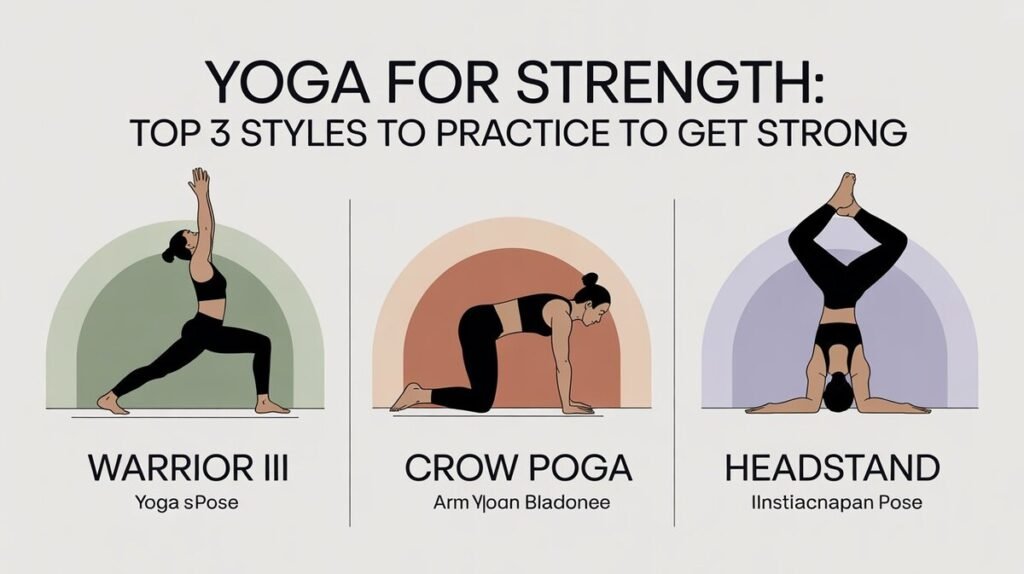
Many people believe that yoga is only about flexibility and deep breathing exercises. However, as a seasoned Yoga Master, I can tell you it is highly effective for building strength. Yoga requires you to support your entire body weight against the force of gravity.
This practice creates a lean and powerful physique through consistent and dedicated effort. You develop physical power and the mental endurance needed for challenging positions. By holding these poses, you build a resilient body that functions better in daily life.
Strength in yoga comes from isometric contractions, where muscles stay under constant tension. This type of training leads to dense muscle fiber development over time. It improves your posture, protects your joints, and boosts your overall metabolic rate significantly.
The Power of Ashtanga Yoga for Pure Physical Endurance

Ashtanga Yoga is often called the “warrior’s path” due to its disciplined and intense structure. This style follows a specific sequence of postures that you must master in order. This ensures that every muscle group is systematically strengthened and conditioned for peak performance.
The Foundation of the Primary Series
The Primary Series of Ashtanga focuses on detoxifying the body through heat and movement. Every transition requires you to lift your body off the mat using abdominal strength. These repetitive movements build incredible shoulder stability and arm definition over many months.
I have seen students go from zero push-ups to advanced arm balances quite quickly. The secret lies in the disciplined daily sequence that targets the core muscles. Your body becomes a solid unit of power through this traditional yoga method.
Mastering Internal Breath and Bandhas
In Ashtanga, we use the “Ujjayi” breath and “Bandhas” to create internal body heat. By engaging the pelvic floor and lower abs, you create a very solid core. This internal engagement is the secret to moving effortlessly between difficult poses.
Advanced practitioners seem to float because they have mastered these internal energy locks. Controlling these locks ensures your strength comes from your center, not just your limbs. This protects you from fatigue and prevents common injuries during intense practice sessions.
Building Mental Fortitude through Repetition
Physical strength requires mental discipline to maintain a pose when your muscles feel tired. Holding a difficult posture for five long breaths builds unique nervous system resilience. This mental toughness translates directly into physical gains during your workout session.
You learn to stay calm under pressure and push past the initial urge to quit. By the end of an Ashtanga session, your body has performed hundreds of contractions. This leaves you feeling empowered, physically solid, and ready for any life challenge.
Developing Functional Power with Power Yoga
Power Yoga is a fitness-based style that focuses on high-intensity movements and long holds. It is designed to maximize muscle growth and create a functionally strong body frame. The paragraphs below explain why Power Yoga is an excellent choice for a strong physique:
Total Body Integration and Stability
Power Yoga movements involve multiple muscle groups working together to maintain balance and force. For example, a “Warrior III” pose requires the leg, core, and back muscles simultaneously. This total body integration ensures you do not develop any weak links.
Traditional weightlifting often isolates muscles, but yoga builds a body that moves as one. As you flow through transitions, your stabilizing muscles are forced to work very hard. This results in a body that is strong in motion, not just in appearance.
High-Intensity Caloric Burn and Toning
Power Yoga keeps you moving fast to elevate your heart rate into the fat-burning zone. This dual action builds lean muscle mass while burning calories at a high rate. It is the fastest way to see physical changes in your body composition.
Many students prefer this style because it offers the benefits of a HIIT workout. By focusing on deep lunges and planks, you perform a bodyweight strength circuit. This improves your muscle-to-fat ratio and tones your entire body effectively.
Increasing Grip and Upper Body Strength
Power Yoga sequences rely heavily on slow-motion push-ups known as Chaturanga transitions. These movements build incredible strength in the chest, triceps, and upper back area. It creates a powerful “V-taper” look that many fitness enthusiasts desire.
Furthermore, the constant contact of your hands with the mat improves your grip strength. This upper body dominance makes Power Yoga perfect for climbers or swimmers. Your wrists and forearms become much stronger through these weight-bearing yoga positions.
The Isometric Strength Secrets of Iyengar Yoga
Iyengar Yoga focuses on precision and the extended holding of poses for structural strength. By using props and holding poses longer, you target the smallest muscle fibers. The text below explains how Iyengar builds a structurally sound and powerful body:
Long Holds and Muscle Fiber Recruitment
In an Iyengar class, you might hold a standing pose for three full minutes. This forces the body to recruit “slow-twitch” muscle fibers responsible for endurance. These fibers are often neglected in fast-moving workouts or traditional cardio exercises.
As a Yoga Master, I believe these long holds create the most significant strength gains. The muscle is forced to adapt to a constant load for a long time. This increases muscle density without adding unnecessary bulk to your frame.
Correcting Imbalances for Maximum Force
Iyengar Yoga uses blocks and straps to ensure your body is in perfect alignment. When your skeleton is aligned, your muscles produce maximum force with very little effort. Correcting hidden imbalances ensures that every ounce of your strength is used.
This structural approach is why professional athletes use yoga to recover from injuries. It builds a “bulletproof” physical frame that can handle heavy daily physical stress. You learn to use your body efficiently and with great power.
Bone Density and Joint Health
Holding weight-bearing poses in Iyengar Yoga increases bone mineral density in the spine. This is a crucial part of strength that many people often forget to mention. Strong bones provide a better anchor for your powerful muscle attachments.
By focusing on joint micro-adjustments, you develop protective internal strength and resilience. This style teaches you that true strength is about holding yourself together. It protects you from chronic pain and age-related physical decline over the years.
Frequently Asked Questions
Can you really get strong just by doing yoga?
Yes, yoga uses your own body weight as a form of resistance training. Advanced poses like arm balances require more strength than many traditional gym exercises.
How often should I practice yoga to see strength gains?
A Yoga Master recommends practicing at least 3 to 4 times per week for results. Consistency is vital because muscles adapt during the rest periods between your sessions.
Which yoga style is best for building arm strength?
Power Yoga and Ashtanga are best for the upper body due to frequent transitions. These styles target the shoulders, triceps, and core muscles through weight-bearing poses.
Final Thoughts: Building a Resilient Body
True strength is measured by the efficiency and resilience of your entire physical system. As a Yoga Master, I encourage you to see your mat as a training ground. Every held pose and deep breath builds a much stronger version of yourself. By choosing Ashtanga, Power Yoga, or Iyengar, you invest in a capable body. Start small, stay consistent, and let yoga show you how strong you can become.